Jonesboro, AR – (JonesboroRightNow.com) – With just over six months until new regulations on student loans go into effect, Northeast Arkansas healthcare leaders are assessing how these regulations might alter the pipeline for the region’s next generation of healthcare professionals.
In July, President Donald Trump signed the “One Big Beautiful Bill Act” (OBBBA). One portion of the Act states that, as of July 1, 2026, several degrees will no longer be classified as “professional.”
According to the U.S. Department of Education (DOE), the OBBBA will cap annual loans for new borrowers at $20,500 for students pursuing a non-professional degree with a $100,000 aggregate limit, and $50,000 for professional students with a $200,000 aggregate limit. Graduate students were previously able to borrow up to the cost of attendance. DOE leadership reasoned that this led institutions to offer more expensive programs with a negative return on investment.
Of the vocations having this professional status removed, several are in the healthcare industry, including those who want to pursue a Master’s or Doctorate in nursing. As of 2025, there are over 5.8 million registered nurses in the United States, and the Bureau of Labor Statistics reported that the workforce is expected to expand 6% by 2032.
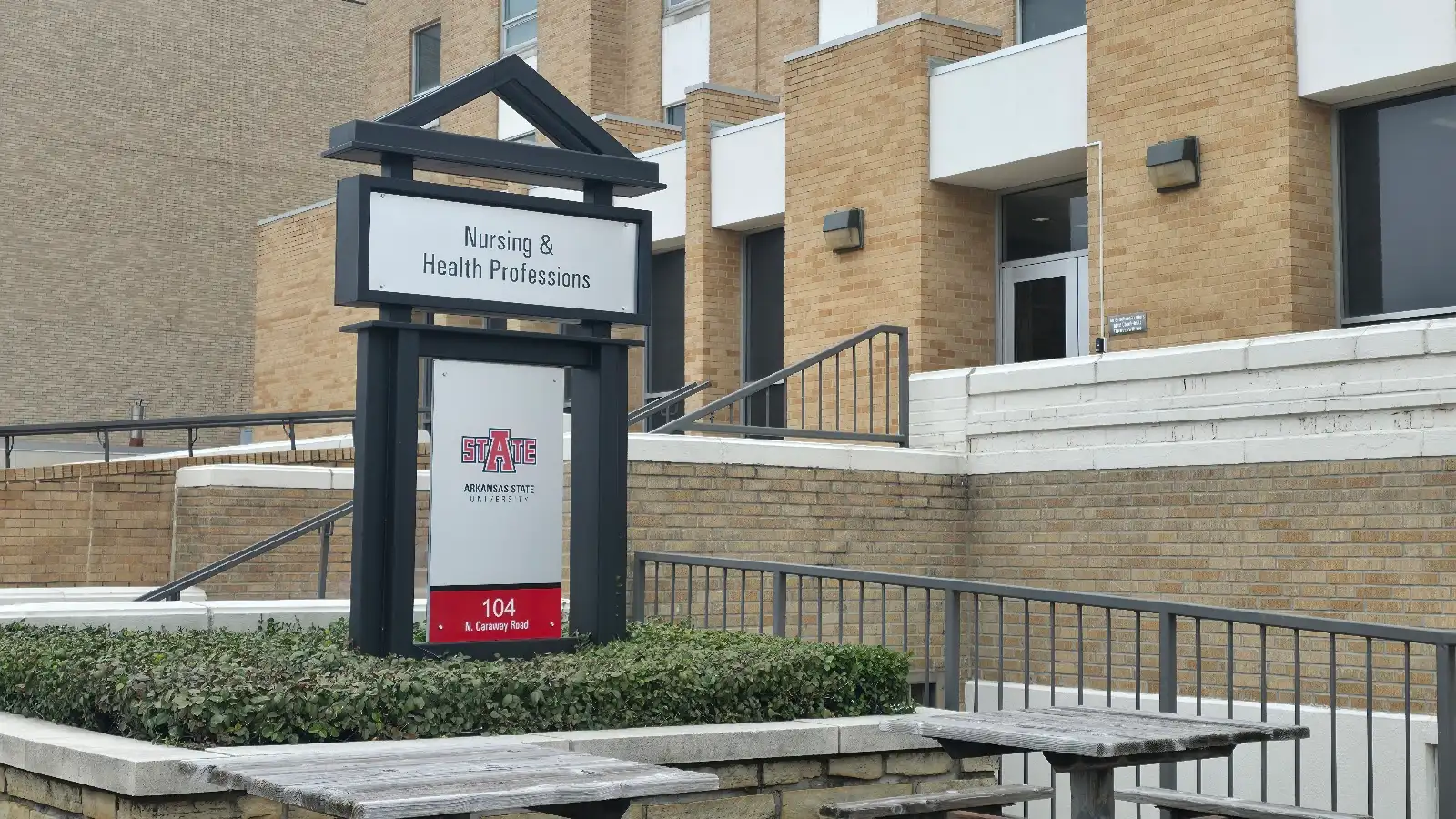
Dr. Kathryn Flannigan, director of the School of Nursing at Arkansas State University (A-State), told JRN that, for graduate nursing, the school has over 800 students enrolled between its Master’s and Doctorate programs. In order to seek further education, she explained that students must have about 1,500 hours of practice logged.
“Some of them have worked for a year or two, and then several have worked for multiple years and have decided to come back,” she said. “They want to change their career trajectory [and] get that advanced degree, the DNP (Doctor of Nursing),” she said.
When it comes to the caps being enacted for the Master’s and Doctorate degrees, however, Dr. Flannigan said it seems to be a case of the DOE looking toward degrees that typically cost more in tuition and seem to have a higher demand on students’ free time, such as medicine and dentistry. Data from the DOE indicated that 95% of nursing students borrow below the annual loan limit.
“My concern with it is [that] students are using this aid for more than just tuition,” she said. “So if you’re looking at tuition, it’s not necessarily as large of a concern [than if] you’re looking at those overall needs. We do have our Doctor of Certified Registered Nurse Anesthetist (CRNA) program, which does fall within that cap guideline. But, these students are also using some financial aid to pay bills and for cost of living while they’re in the program.”
The OBBBA includes a legacy provision, which would allow some graduate students who received student loans before July 2026 to continue borrowing under the old rules for up to three more years, or their program’s duration.
As of now, Dr. Flannigan said they have not seen a rush of applicants yet due to this provision, and it’s hard to tell what the true impact on enrollment will be. However, she does anticipate that some students might speed up the process in order to be grandfathered in.
“With Arkansas State and our graduate programs, we do offer six times a year admission. We have three more entry points before this bill takes effect. If we’re going to see an increase before we’re going to see a decline, we don’t know yet,” she explained.
While the news of caps has created uncertainty for those pursuing further education, Dr. Flannigan encouraged students not to avoid a degree because of the regulations.
“You are a nursing professional. The public sees you as this,” she said. “Be an advocate for yourself, just as you are for your patient. Look for scholarship opportunities. They’re there, but ensure that the program that you are seeking fits your needs [and] goals.”
Other degrees in healthcare impacted by OBBBA’s student loan cap changes include:
- Physician Assistant
- Doctor in Physical Therapy
- Doctor in Occupational Therapy
- Audiology
- Dental Hygiene
- Master’s in Public Health
- Doctor in Public Health
JRN reached out to NEA Baptist for comment on how they would support students wishing to pursue or further their healthcare education. A statement from CEO Sam Lynd said the hospital would continue to advocate for assistance programs for staff and those who aim to be a part of the hospital in the future.
“Our community is also blessed with outstanding higher education institutions developing the next generation of skilled, compassionate caregivers,” he said. “The care we provide is only possible through an ongoing commitment of these professionals. Supporting them is essential to the health and well-being of communities across Northeast Arkansas.”
Arkansas Methodist Medical Center (AMMC) in Paragould was also contacted. CEO Brad Bloemer said they are committed to their support of nurses and healthcare professionals and their continued career advancement. He added that AMMC will continue to offer support resources for employees who are furthering their education.
“As an organization, we will closely review the implications of the federal policy update and will continue to monitor any potential effects on those entering advanced programs,” he said in a statement sent to JRN.
St. Bernards Healthcare and NYITCOM (New York Institute of Technology College of Osteopathic Medicine) at A-State were also contacted for comment. Both declined to be interviewed or provide statements.
Students or potential students with questions regarding student loans and payment options should contact their student loan provider. They can also call the Federal Student Aid Information Center at 1-800-433-3243 or visit StudentAid.gov.